Features
Run structure is not a fashion. It is the only way a team of one to five people can generate enough strategy content to be worth $10 — and the games that skip it are almost always the ones where a simulation generates the content instead.
Look at a single week of Steam’s chart and the split is obvious. In the week ending 9 September 2026, the new strategy-tagged entries on the Steam 250 seven-day chart divided cleanly into two groups: games built as repeatable runs, and games built as fixed campaigns or open simulations. Almost every one about fighting was a run. Almost every one about building or administering was not.
This week’s evidence
| Game | Chart position | Structure | Price |
|---|---|---|---|
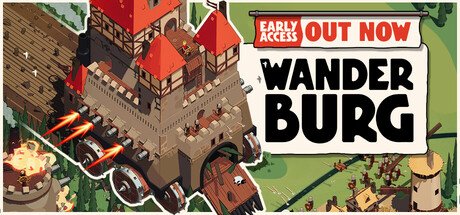
| Wanderburg | #23, new entry | Roguelike run | $9.74 |
| Dice Tavern: Farkle Roguelike | #15, new entry | Roguelike run | $7.99 |
| Deadzoned | #34, up +14 | Roguelike run | $4.24 |
| Dread Admiral | #46, up +1 | Roguelite campaign, permanent losses | $11.19 |
| Orc Incremental | #33, new entry | Run plus ascension | $6.79 |
| Alchemy Factory | #3, new entry | Persistent factory | $14.39 |
| Acceptable Losses | #45, new entry | Fixed 20-day campaign | $5.59 |
| Next Reign: Kingdom | #28, up +10 | Incremental, persistent | $3.99 |
Why the run wins for small teams
A campaign’s cost scales with authored content. A run’s does not.
Twenty hours of campaign means twenty hours of authored missions, each balanced against a difficulty curve that assumes the player did the previous nineteen. That is a content bill you pay in person-months. Twenty hours of a good run-based game means one ruleset, a randomiser and enough interacting parts that the combinations do the work. For a five-person team, that is not a stylistic preference; it is the difference between shipping and not.
Runs make difficulty tuning tractable
Balancing a campaign requires predicting player state at every mission. Balancing a run requires balancing one distribution. When a player loses a run, the game has not failed — losing is the designed outcome, and the player restarts without a support ticket about an unwinnable save. Small teams cannot afford QA across a branching campaign; they can afford to tune a curve.
The failure state solves the refund window
Steam’s two-hour refund window punishes slow openings. A run-based game is at full expressive power inside twenty minutes, because the first run is the game. A campaign spends its first two hours on tutorials and setup — exactly the window in which a buyer decides. Dice Tavern can demonstrate its entire loop in one tavern; a strategy campaign at the same price cannot.
So why do the building games escape?
Because a simulation is a content generator too, just a different one. Alchemy Factory does not need authored missions, because the content is whatever the player’s own factory does wrong. Next Reign: Kingdom generates its own escalation through production chains. These games get the same economics as a roguelike — systems, not authored levels — without needing a reset to justify them.
That is the actual pattern. It is not “strategy is becoming roguelike”. It is that indie strategy has abandoned authored content in both directions, and a run is what you use when the fun requires losing. Where the fun comes from accumulation, nobody bothers with a reset.
The middle case: permanent loss without a reset
Dread Admiral is the interesting exception, because it takes the roguelike’s consequence and refuses its mercy. Ships lost are gone forever, but the campaign continues, so a bad decision is carried rather than wiped. Acceptable Losses does something similar with a fixed twenty-day clock. Both are betting that the emotional weight of a permanent mistake beats the convenience of a clean restart — which is a real argument, and the reason not every designer has accepted the run as settled.
Three things this does not mean
It does not mean campaigns are dead. It means campaigns have moved up-budget. Authored strategy campaigns still ship; they ship from teams who can pay for them, at prices above the $4 to $15 band this chart lives in.
It does not mean roguelike strategy is easier to make well. The economics are easier. The design is not. A run-based game with a shallow rule set is exposed within an hour, because the player sees the whole system immediately — the same property that makes it cheap to build makes it impossible to hide behind content.
It does not mean this week is representative. A seven-day chart favours new releases, and several of these games have fewer than 100 reviews. Small samples move. The pattern is worth watching precisely because one week cannot prove it.
Frequently asked questions
Why are so many indie strategy games roguelikes?
Because run structure lets a small team generate content from systems rather than from authored missions, keeps difficulty tuning tractable, and shows the full game inside Steam’s two-hour refund window.
What is the difference between a roguelike and a roguelite?
Broadly, a roguelike resets you fully on death, while a roguelite carries some progress forward between runs. In practice most modern releases are roguelites, and the terms are used loosely.
Are there still indie strategy games with real campaigns?
Yes. Acceptable Losses runs a fixed twenty-day campaign, and Dread Admiral runs a persistent fleet campaign with permanent losses. Both are on Steam under 12 dollars.
Is a roguelike structure a sign of a low-effort game?
No, but it removes a hiding place. Because the player sees the whole ruleset within an hour, a shallow run-based game is exposed faster than a shallow campaign.
What is the cheapest good indie strategy game on Steam right now?
On this week’s chart, Next Reign: Kingdom at 3.99 dollars and Deadzoned at 4.24 dollars are the cheapest entries that scored above 7 on Steam 250.
Do automation games count as strategy?
Steam tags many of them as strategy, and they behave like it economically: the content comes from systems rather than authored levels. They just do not need a run structure, because accumulation rather than loss is the point.
Sources and citation
- Steam 250 seven-day chart, chart positions and movement retrieved 9 September 2026
https://steam250.com/7day - Steam store API, prices, genres and release dates for every game listed
https://store.steampowered.com/ - Steam refund policy, the two-hour playtime window referenced above
https://store.steampowered.com/steam_refunds
Recommended
- Every New Roguelike Worth Playing Right Now (Including a Pachinko One)
- The Best Action Roguelikes on Steam (Pick the System, Not the Score)
- 20 Indie Games Under $10 That Are Better Than Most $60 Releases
- The Best Simulation Games on Steam Right Now (Shops, Repairs and Total Chaos)
- Incremental Games Are Taking Over Steam (And They Are Getting Strange)
- Autobattlers and Self-Playing Deckbuilders: Why Taking the Controls Away Makes the Game Honest
- Games Like Vampire Survivors: Every Worthwhile Successor (Including a Pachinko One)
- The Best Business and Tycoon Games on Steam Right Now
- The Steam Refund Policy, Explained (Including the Cases Everyone Gets Wrong)
- 11 Best Simulation and Management Games on Steam Right Now
New reads this week
Published 16 September 2026 on IndieForGames.