Tools
Yes — and the reason is not that a launch discount sells more copies. It is that Steam only gives you one. We parsed all 50 entries on the Steam 250 seven-day chart for the week of 7 September 2026. Three were free. Of the 47 paid games, 41 launched on discount — 87%.
When almost nine in ten new releases do something, it has stopped being a tactic and become the default. The interesting question is what the default is actually buying.
What the week’s chart looked like
| Measure | Value |
|---|---|
| Games on the chart | 50 |
| Free to play | 3 |
| Paid games launched on discount | 41 of 47 (87%) |
| Priced under $10 | 33 |
| Priced under $5 | 15 |
| Average paid price | $11.53 |
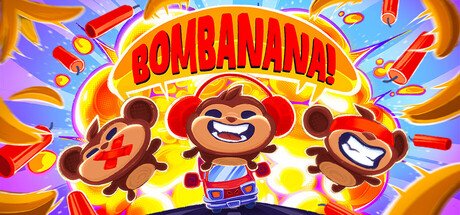
The discounts themselves cluster tightly. Isle of Reveries took the minimum 10% ($17.99 from $19.99). Shoe it All!, Ribbit Rogue and Fofumia all took 20%. Moonlighter 2 took 30%, and BOMBANANA! went to roughly 38% — close to the ceiling Valve allows.
The rules that actually drive this
Valve’s Steamworks discounting documentation sets the constraints, and they explain the behaviour better than any theory about consumer psychology.
| Rule | Detail |
|---|---|
| Launch discount length | 7 to 14 days, starting at release |
| Launch discount size | Minimum 10%, maximum 40% |
| When it must be set | Before release — it cannot be added afterwards |
| Post-release cooldown | No discounts for 30 days after release; the launch discount is the only exception |
| Regular discount range | 10% to 95%, running 1 to 14 days |
| Between discounts | 30 days, except seasonal sales |
| After a price increase | 30-day cooldown before you may discount |
| Base price during a discount | Cannot be changed while one is active or scheduled |
The line that decides it
Products cannot be discounted for 30 days following release, and the launch discount is the sole exception to that rule.
So the choice is not “discount now or discount later.” It is “discount now or do not touch your price for a month.” And that month is the month where your store page gets its highest traffic, where the new-releases queue is still surfacing you, and where every review you will use as social proof for the next year is being written.
It also has to be configured before you ship. A developer who launches at full price and watches conversion underperform for a week cannot respond. That option was closed on release day.
The argument: it is not a discount, it is your price
When 87% of a cohort launches on sale, buyers stop reading the strikethrough as a saving. They read the discounted figure as the price and the list price as decoration — the same way nobody believes a mattress was ever sold at full price.
Which means the launch discount is doing something other than creating urgency. It is doing two things that survive the scepticism:
It puts you in the discount UI
A discounted game renders differently across Steam. It carries a percentage badge in the queue, in search, on your wishlist notifications and in the discovery feed. That badge is visual weight in a list where every competitor is a 231-pixel capsule. This is a layout advantage, not a pricing one, and it is available for exactly 7 to 14 days.
It converts wishlists while the email is fresh
Wishlist release notifications go out once. If the launch discount is running when that mail lands, the notification carries a number. Since Steam will not let you discount again for 30 days, a launch without one means your single highest-intent audience gets contacted at full price and cannot be re-contacted with a better offer for a month.
The honest caveat
A launch discount anchors your price downward, permanently. If you launch a $19.99 game at 20% off, a meaningful number of buyers now believe the game is a $15.99 game that is sometimes $19.99. Every later sale gets measured from that belief, not from your list price. Studios selling premium-positioned games often skip the launch discount for exactly this reason, and take the 30-day freeze deliberately.
Our sample is one week and 50 games. The Steam 250 seven-day chart ranks by review score, so it over-represents well-received games and under-represents everything that launched badly. The 87% figure describes what successful new releases did that week, not what the whole store does.
We cannot see the counterfactual. Nothing here shows that discounted launches outsold undiscounted ones. It shows that near-universal adoption plus a hard 30-day lockout makes the discount close to costless to take and expensive to skip, which is a different and weaker claim than “it works.”
Frequently asked questions
How long can a Steam launch discount run?
Between 7 and 14 days, starting when the product releases and ending at 10am Pacific on the applicable day.
What is the maximum Steam launch discount?
40 percent. The minimum is 10 percent. Regular post-launch discounts allow a wider range, from 10 percent up to 95 percent.
Can you add a launch discount after your game releases?
No. A launch discount must be configured before the release date. Once the game is out, it cannot be added.
Can you discount a game right after launch on Steam?
No. Products cannot be discounted for 30 days following Early Access or full release, and the launch discount is the only exception to that rule.
How often can you discount a game on Steam?
Not within 30 days of another discount, though Steam seasonal sales in spring, summer, autumn and winter are exempt from that cooldown.
Does raising your price stop you from discounting?
Yes, for 30 days. A price increase in any currency triggers a 30-day cooldown before the product can be discounted. Price decreases do not.
Should an indie game launch on discount?
For most, yes, because the 30-day post-release cooldown means skipping it removes your only price lever during your highest-traffic month. The main reason to skip it is deliberate premium positioning, since a launch discount anchors buyer expectations at the lower figure.
Can you change your base price during a discount?
No. Valve states it is not possible to increase or decrease a base price during an active discount, or while one is scheduled in the future.
Sources and citation
- Steamworks documentation on discounting — launch discount length and caps, cooldown rules and base price restrictions
https://partner.steamgames.com/doc/marketing/discounts - Steam 250 seven-day chart, week of 7 September 2026 — source for the 50 chart entries, prices and discount status analysed here
https://steam250.com/7day - Steam store app data for individual price and discount confirmation
https://store.steampowered.com/
Recommended
- How to Price an Indie Game on Steam in 2026: What One Week of the Chart Actually Shows
- The Steam Wishlist Playbook: Turning Followers Into Launch-Day Buyers
- Steam Sale Calendar 2026: Summer Sale Recap and Every Date Still to Come
- Announcing Your Game: A Pre-Launch Timeline for Maximum Wishlists
- A Solo Dev Got 10,000 Steam Wishlists in 2 Weeks With $0 in Ads. Here Is What Actually Worked
- How to Get Your Indie Game Noticed by Curators and Communities
- Why Indie Games Shouldn’t Be Marketed Like AAA Titles
- Raw Gameplay Beats Polished Trailers: Why Authenticity Sells Indie Games
- 20 Indie Games Under $10 That Are Better Than Most $60 Releases
- The Steam Refund Policy, Explained (Including the Cases Everyone Gets Wrong)