Features
Asynchronous PvP means you compete against what another player built, not against the player. There is no lobby, no queue and no turn timer — and for small multiplayer games that is often the difference between having a playerbase and pretending to.
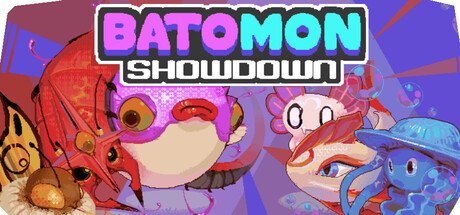
The current clear example is Batomon Showdown, which climbed 2 places to #17 on the Steam 250 seven-day chart with an 89% positive rating from 379 reviews. Its Steam page lists it as multiplayer-only, online PvP — and also as “playable without timed input” and “playable at your own pace”. Those two things are not normally true at the same time.
How it works
You build a team, a deck, a loadout or a course. The game saves it. Someone else’s game loads it later and plays against it while you are asleep. You are a real opponent with real decisions behind you; you are just not present.
| Live PvP | Asynchronous PvP | |
|---|---|---|
| Queue time | Depends on population right now | None — opponents are stored |
| Turn timers | Required | None |
| Timezone matching | Required | Irrelevant |
| Rage quits and toxicity | Live problem | Structurally impossible |
| Reading your opponent | Core skill | Removed |
| In-match adaptation | Yes | No |
Why small games reach for it
It breaks the population death spiral
A live PvP game with a modest playerbase has a queue that gets longer as players drift away, which makes more players drift away. Asynchronous play removes the dependency entirely: a game with two hundred active players still has thousands of saved teams to face. The population only has to be large enough to produce variety, not large enough to be online simultaneously.
It makes dominant builds into content
This is the genuinely interesting consequence. In live PvP, a build that beats everything is a balance emergency. In asynchronous PvP it becomes the next player’s puzzle — Batomon Showdown’s own store page invites players to “break the game” by training creatures to overpowered levels, then hands those teams to everyone else as opposition. The overpowered build stops being a bug report and starts being a level.
It fits the way people actually play
No timers means you can put the game down mid-decision. For a genre built on team composition and synergy hunting, thinking time is the activity. Forcing it into a thirty-second turn clock, as live play must, is working against the design.
What asynchronous PvP gives up
The honest part. Three real losses, and none of them are small.
There is no reading your opponent
Bluffing, baiting, adapting mid-match, noticing that someone panics under pressure — all of that requires a person on the other end. Asynchronous PvP is a solved-puzzle format. If what you love about competitive play is the psychology, this is not a substitute for it.
There is no comeback
When your side is a submitted configuration, you cannot rescue a losing position with a better read. The match is decided by preparation. That makes losses feel less dramatic and also less instructive.
“No timers” also means no tension
The clock is not purely a nuisance. It is what makes a live match feel like an event. Removing it buys convenience with stakes, and whether that trade is worth it depends entirely on why you queue at all.
Where you have already seen this
The format is not new — it is the structure behind ghost data in racing games, player-built levels, and most of what the site covers under autobattlers and self-playing deckbuilders, where the player’s job ends once the composition is locked in. What is newer is games leading with it as the selling point rather than hiding it behind a matchmaking screen.
Batomon Showdown is the current clean example because it is honest about it: the store page advertises the absence of timers rather than apologising for the absence of live opponents.
The caveat on Batomon Showdown specifically
It is multiplayer-only. There is no single-player mode listed on the Steam page, which means the entire experience depends on other people continuing to submit teams. Asynchronous play makes a game resilient to a small population, not to an empty one. At 379 reviews in its first days that question is genuinely open, and anyone telling you otherwise in launch week is guessing.
Frequently asked questions
What does asynchronous PvP mean?
You play against a team, deck or loadout another player built and saved, rather than against that player in real time. There is no lobby and no turn timer.
Is Batomon Showdown asynchronous?
Yes. The Steam store page describes asynchronous multiplayer against player-made teams, with no timers rushing decisions.
Is asynchronous PvP still multiplayer?
Yes, in the sense that a human designed everything you face. It is not multiplayer in the sense of two people playing at the same moment.
Why do indie games use asynchronous PvP?
It removes the dependency on having enough players online simultaneously. A modest playerbase still produces a large library of saved opponents, so queue times never become the reason people leave.
Can you play Batomon Showdown offline?
No. Steam lists it as multiplayer and online PvP only, with no single-player mode.
How much does Batomon Showdown cost?
9.74 dollars on Steam, discounted from a 14.99 dollars list price.
Sources and citation
- Batomon Showdown Steam store page — asynchronous multiplayer, feature tags, price and modes
https://store.steampowered.com/app/4557380/ - Steam Store API (appdetails) — category tags, price, discount and release date verification
https://store.steampowered.com/api/appdetails - Steam 250 seven-day chart, retrieved 18 September 2026 — chart position, movement, score and review count
https://steam250.com/7day
Recommended
- Batomon Showdown — Price, Gameplay and Reviews
- Autobattlers and Self-Playing Deckbuilders: Why Taking the Controls Away Makes the Game Honest
- New Multiplayer Games on Steam: The Best Co-op Releases Right Now
- 8 Roguelike Deckbuilders on Steam That Removed a Card — And Got Better for It
- 11 Best Turn-Based Tactics Games on Steam (Nine Are Roguelites, and That Fixed the Genre)
- Is That Game Actually Dead? The Palworld Dev Says You Are Reading Steam Numbers Wrong
- Is Gladio Mori Cross-Platform? Yes — Steam, PS5 and Xbox
- 18 of Steam’s 50 Best Games This Week Are Barely 48 Hours Old
- Why New Indie Strategy Games Keep Turning Into Roguelikes (And Which Ones Do Not)
- The Best New Steam Releases This Week (Ranked by Actual Reviews)