Features
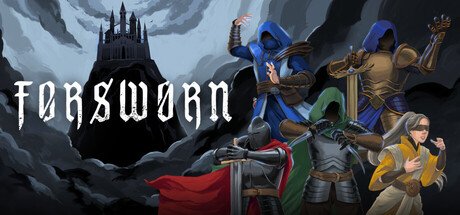
Nine of the eleven best turn-based tactics games on Steam right now are built around runs rather than campaigns — and that is not a trend, it is a repair. Turn-based tactics used to lose players at hour six, when a squad wipe made forty hours of progress unrecoverable. Run structure fixed it, and the genre grew back.
Every price, release date and studio credit below was checked against the Steam store API at the time of writing.
The eleven
| Game | Price | Structure | The hook |
|---|---|---|---|
| Forsworn | $12.79 | Roguelite | Heroes level across runs, and it has online co-op |
| Veterum | $19.99 | Campaign | Open world with an interactive combat environment |
| Tenebris: Terra Incognita | $14.99 | Campaign | 23 heroes and 17 bosses to build against |
| Dread Admiral | $11.19 | Roguelite | Naval, and every ship you lose is gone forever |
| Vampire Crawlers | $9.99 | Roguelite | Turn-based deckbuilder from the Vampire Survivors team |
| Frontier: Path of Shadows | $12.74 | Roguelite | Tactical RPG, on the week chart at #40 |
| Effulgence RPG | $14.99 | Run-based | Charted at #50 the week it launched |
| Acceptable Losses | $7.99 | Run-based | A 20-day WWI campaign you are meant to replay |
| Dataminers | $6.99 | Run-based | Tower-clearing logic under a firewall timer |
| The Swashbugglers | $6.39 | Roguelite autochess | Insect heroes with equipment and stone inscriptions |
| Order Automatica | $4.79 | Roguelite | A 3×3 ritual grid the studio calls chess with demons |
Why run structure fixed tactics specifically
Every genre that adopted roguelite structure got something from it, but tactics got the most, because tactics had the worst version of the problem.
The unrecoverable save
In a tactics campaign, your army is your progress. Lose four veterans in one ambush and the remaining twenty hours are harder than the game was balanced for, so the correct move is to reload — which means the interesting decision, committing to a risk, is the one the game punishes you for making. Run structure removes the reload by making loss the end of a chapter instead of the ruin of a save.
Build-lock
Talent trees in a long campaign are a one-way door. Tenebris leans into this with 23 heroes and deep trees, and it is the reason a campaign tactics game needs far more careful balancing than a run-based one: a bad choice at hour two can still be poisoning the game at hour thirty. In Forsworn, the same bad choice costs you one run.
Permadeath becomes a feature instead of a threat
Dread Admiral is the clean example: every ship lost is gone forever, and because the campaign is a run, that rule creates tension rather than a reload prompt. The same rule in a forty-hour campaign would just be cruelty.
The two campaign holdouts, and why they still work
Veterum at $19.99 and Tenebris: Terra Incognita at $14.99 are the most expensive games here, and both are structured as campaigns. That pricing is not a coincidence. A campaign promises a destination, and players pay more for a destination than for a loop. What they are buying is authored content — Tenebris advertises 17 bosses, Veterum an open world with quests and artifacts — and authored content costs real money to make, which is why almost nobody at the $5 end attempts it.
If you want a tactics game that ends, those two are the list. If you want a tactics game that keeps going, the other nine are cheaper and deeper per dollar.
The cheap end is where the design risk is
The three cheapest games here are also the three strangest. Order Automatica compresses tactics onto a 3×3 grid and then automates the battle, so the entire game is the placement. The Swashbugglers uses autochess rules with insects. Dataminers puts a firewall timer on a logic puzzle and calls it hacking.
At $4.79 to $6.99 none of these had to be safe, and that is the actual argument for shopping at the bottom of this genre: a tactics game that costs less than a sandwich can afford to be wrong about something, and the ones that are right about something new tend to be found here first.
What turn-based tactics is still bad at
Co-op that respects both players’ time
Forsworn is the only game on this list with online co-op, and turn-based co-op has a structural flaw nobody has solved: one player thinking is the other player waiting. Splitting a party helps, but it does not remove the dead time. If you want tactics with a friend, expect conversation to be the feature.
Telling you which decision killed you
Run-based tactics still has poor feedback. You lose on turn nine because of something you did on turn three, and almost none of these games will tell you that. The genre has fixed the cost of failure but not the legibility of it.
Small review bases
Most of this list launched within the last two weeks. Forsworn has 171 reviews, Tenebris has 334. Those are real signals but they are early ones, and tactics is a genre where balance complaints arrive at hour twenty, not hour two.
Frequently asked questions
What is the best turn-based tactics game on Steam right now?
For most players, Forsworn at 12.79 dollars, because heroes level across runs and it is the only one here with online co-op. If you want a game that ends rather than loops, Tenebris: Terra Incognita at 14.99 dollars is the stronger pick.
What is the difference between tactical RPG and turn-based tactics?
A tactical RPG puts persistent character progression and story around the battles, as Frontier: Path of Shadows and Tenebris do. Pure turn-based tactics treats each battle as the whole game, as Order Automatica does on its 3 by 3 grid. The line is blurry and most games sit somewhere between.
Are there any cheap turn-based tactics games on Steam?
Yes. Order Automatica is 4.79 dollars, The Swashbugglers is 6.39 dollars, Dataminers is 6.99 dollars and Acceptable Losses is 7.99 dollars, all at the time of writing.
Do turn-based tactics games have co-op?
Rarely. Of the eleven games here, only Forsworn lists online co-op. Turns serialise badly in multiplayer, so most studios in the genre ship single-player only.
Why are so many tactics games roguelites now?
Because a squad wipe in a long campaign used to make the rest of the save unwinnable, which pushed players into save-scumming. Run structure makes a loss the end of a run instead, so committing to a risky play stops being a mistake.
Is Vampire Crawlers a tactics game?
It is a turn-based roguelite deckbuilder from poncle and Nosebleed Interactive, the Vampire Survivors team. The card layer makes it a deckbuilder, but the moment-to-moment decisions are positional and turn-based, so it plays closer to tactics than the store tags suggest.
Sources and citation
- Steam store API appdetails endpoint, the source for every price, developer credit and release date above, retrieved 16 September 2026
https://store.steampowered.com/api/appdetails - Steam 250 seven-day chart, for the current chart positions of Forsworn, Frontier: Path of Shadows and Effulgence RPG
https://steam250.com/7day - Steam store pages for each listed game, for feature lists, co-op support and review counts
https://store.steampowered.com/
Recommended
- Why New Indie Strategy Games Keep Turning Into Roguelikes (And Which Ones Do Not)
- The Best Action Roguelikes on Steam (Pick the System, Not the Score)
- 8 Roguelike Deckbuilders on Steam That Removed a Card — And Got Better for It
- Autobattlers and Self-Playing Deckbuilders: Why Taking the Controls Away Makes the Game Honest
- Every New Roguelike Worth Playing Right Now (Including a Pachinko One)
- Games Like Vampire Survivors: Every Worthwhile Successor (Including a Pachinko One)
- 20 Indie Games Under $10 That Are Better Than Most $60 Releases
- 11 Best Simulation and Management Games on Steam Right Now
- Every Recent Steam Game Rated Over 90% (And How to Read the Score)
- 33 of Steam’s 50 Best New Games This Week Are Self-Published — And the Other 17 Charge 56% More