Features
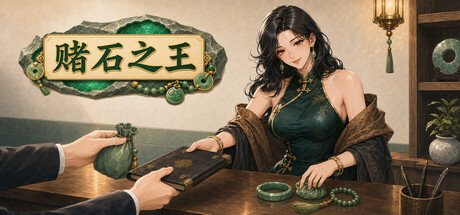
Yes, jade stone gambling is a real trade, and it works roughly the way the game says it does: you buy a rock without knowing what is inside it. King of Jade: Stone Tycoon entered the Steam 250 weekly chart at #33 this week, and it is built on a practice most Western players have never heard of — which is exactly why it is worth explaining before you buy.
What the game has you do
You start with a stall on Old Street. You buy raw stones from the market, then assess them: shine a light through, scrape the skin, cut small windows to glimpse the interior. At any point you can sell the rough on at whatever the market will pay, or keep cutting and find out. What you find gets crafted into jewellery and sold to customers with their own tastes.
Rent falls due regardless. The developer’s own line is the cleanest summary of the design: “One cut can make your fortune. One cut can wipe you out. Either way, tomorrow’s rent is still due.”
Why the real practice is called gambling
The underlying problem is physical. Jade is commonly encased in other stone, and cutting into that stone can damage the jade inside it. So a buyer has to judge a boulder without opening it — and the value gap between a good stone and a worthless one is enormous.
Historically, traders assessed rough by three methods: looking at surface colouration, tapping the rock with metal tools and listening to the sound, and feeling subtle differences in how the wet surface gripped the skin. Those techniques have mostly been abandoned. The Myanma Gems Enterprise now cuts straight through whole boulders to expose the jade.
Where the trade actually happens
The centre is Kachin State in northern Myanmar, particularly the Jade Tract around Lonkin Township, with Yunnan Province in China as the historic trading partner. Myanmar jade export revenues rose from roughly $150–300 million in the early 2000s to $1.75 billion in the 2010–2011 fiscal year.
What the game leaves out
This is the honest part, and it matters more than usual here.
The real jade trade is not a cozy stall on Old Street. Myanmar’s jade industry sits at the centre of armed conflict in Kachin State, a very large black market, and repeated deadly landslides at the mines. Estimates of its value vary enormously precisely because so much of it is unofficial — one widely cited figure puts the trade at close to half of national GDP, and that number is disputed rather than settled.
King of Jade simulates the appraisal and the market stall. It does not simulate where the stones come from. That is a normal thing for a seven-dollar management game to do, but it is worth knowing that the subject has a considerably darker context than the store page suggests.
What is verified and what is the game’s own depiction
Two things to separate. The existence of the trade, the encasing problem, the traditional assessment methods and the export figures above come from documentation of the Myanmar jade trade. The specific mechanics the game uses — shining a torch through a stone, scraping skin, cutting small viewing windows — come from the developer’s own description of the game, not from a sourced account of current practice. Treat the game as inspired by the trade rather than as a documentary of it.
Is the game any good?
Early signs are positive and the sample is small. It entered the weekly chart as a new entry at #33 with a score of 7.31, at 97% positive from 60 reviews. Sixty reviews at launch week is the range where the percentage should be read as encouraging rather than conclusive — see how to read launch-week Steam scores.
It costs $7.19, down 10 percent from $7.99. English, Simplified Chinese and Traditional Chinese are supported. Single-player only, with Steam Achievements and Leaderboards.
Mechanically, what makes it stand out from the rest of the shop simulator wave is that the purchase decision carries real downside. In most of these games ordering stock is a checklist. Here it is the bet.
Frequently asked questions
What is jade stone gambling?
Buying uncut jade rough without knowing the quality of the stone inside. Because jade is usually encased in other rock and cutting can damage it, buyers must judge value from the outside, and the difference between a valuable stone and a worthless one is very large.
Is jade stone gambling real?
Yes. Trading in uncut jade rough is a long-established practice centred on Kachin State in northern Myanmar, with Yunnan Province in China as the historic trading partner.
How did traders traditionally judge uncut jade?
By observing surface colouration, tapping the stone with metal tools and listening to the sound produced, and feeling subtle differences in how the wet rock adhered to the skin. These methods have largely been abandoned in favour of cutting through whole boulders.
How much does King of Jade: Stone Tycoon cost?
7.19 dollars on Steam at the time of writing, a 10 percent discount from its 7.99 dollars list price.
Is King of Jade: Stone Tycoon in English?
Yes. The Steam page lists interface and subtitle support for English, Simplified Chinese and Traditional Chinese.
Does King of Jade: Stone Tycoon have co-op?
No. It is single-player only, with Steam Achievements and Steam Leaderboards.
How big is the Myanmar jade trade?
Official jade export revenues rose from about 150 to 300 million dollars in the early 2000s to 1.75 billion dollars in the 2010 to 2011 fiscal year. Estimates of the full trade including the black market vary widely and are disputed.
Sources and citation
- Steam store page, King of Jade: Stone Tycoon — mechanics, price, languages, release date
https://store.steampowered.com/app/4821420/ - Jade trade in Myanmar — assessment methods, trading centres, export revenue figures, black market context
https://en.wikipedia.org/wiki/Jade_trade_in_Myanmar - Al Jazeera, Myanmar losing billions to jade black market — scale of unofficial trade
https://www.aljazeera.com/amp/news/2014/11/27/myanmar-losing-billions-to-jade-black-market - Steam 250 weekly chart — chart position, score and review count
https://steam250.com/7day
Recommended
- Four Shop Simulators Charted on Steam This Week — And They All Share the Same Five Verbs
- The Best Business and Tycoon Games on Steam Right Now
- Shop Keeper Games Are Getting Weird (One Makes You Fight for Your Stock)
- The Best Indie Trading Games on Steam
- The Best Simulation Games on Steam Right Now (Shops, Repairs and Total Chaos)
- 11 Best Simulation and Management Games on Steam Right Now
- 20 Indie Games Under $10 That Are Better Than Most $60 Releases
- Why Almost Every New Steam Game Is 95% Positive — And the One This Week That Is Not
- 12 New Indie Games Released This Week on Steam (And Which Are Worth It)
- How to Actually Find Good Games on Steam (The Front Page Is Not It)