Features
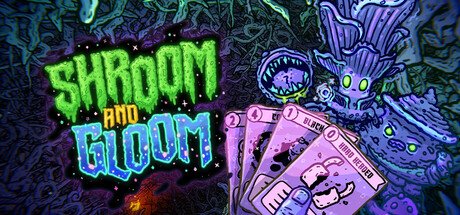
A double deckbuilder means you build two decks that do different jobs — one for fighting, one for moving through the dungeon — and Shroom and Gloom is the game that just made the term trend. “Shroom and gloom roguelike deckbuilder” registered as a Breakout rising query against “roguelike” on Google Trends in the United States this week, the strongest roguelike signal in the window.
Shroom and Gloom entered Early Access on 10 September 2026 at $14.99, developed by Team Lazerbeam and published by Devolver Digital. It is sitting at #10 on the Steam 250 seven-day chart with a score of 7.70 from 168 reviews.
What a double deckbuilder actually changes
In a standard roguelike deckbuilder, one deck does everything. Every card you add for exploration utility is a card that can clog your hand in a fight, so the genre’s central tension is really just deck dilution — you get punished for taking anything situational.
Splitting into a combat deck and an explore deck removes that punishment, and it changes what a reward can be. The explore deck navigates dungeons, modifies your cards and unlocks new weapons and abilities. Because those cards live somewhere else, a utility reward is no longer a tax on your damage output. That is the whole argument for the structure: it lets a run have two independent improvement curves instead of one curve you keep sabotaging.
The second mechanic doing real work is infinite card growth. Low-level starting cards can be grown into overpowered attacks, which means the starting hand is not dead weight by act three. Most deckbuilders solve the same problem by letting you remove cards — something we have written about before, because removal is the single most reliable design lever in the genre. Growth is the opposite approach to the same problem, and it is rarer because it is harder to balance.
First person is the unusual part
Deckbuilders are overwhelmingly flat and side-on. Shroom and Gloom runs in first person, with hand-drawn art and animations set inside dozens of 3D spaces. The practical effect is that the dungeon becomes a place you are standing in rather than a node map, which is what gives the explore deck something to be about. A navigation deck in a top-down roguelike is just a menu with extra steps.
What it is not good for
- It is Early Access. The 7.70 score and 168 reviews describe a build in progress, not a finished game.
- It does not run on Steam Deck. Valve’s compatibility report currently lists it as Unsupported — not Unknown, but actively marked as not working. If handheld is how you play roguelikes, this one is not available to you yet.
- Two languages only. English and Simplified Chinese. A card game leans hard on text, so that is a real barrier rather than a cosmetic one.
- No Linux build, though Windows and macOS are both listed.
Frequently asked questions
What is a double deckbuilder?
A deckbuilder where you maintain two separate decks with different purposes. In Shroom and Gloom one deck handles combat and the other handles dungeon navigation, card modification and unlocking abilities.
How much does Shroom and Gloom cost?
14.99 dollars on Steam, in Early Access, at the time of writing.
Is Shroom and Gloom on Steam Deck?
No. Valve currently lists its Steam Deck compatibility as Unsupported.
Who published Shroom and Gloom?
It is developed by Team Lazerbeam and published by Devolver Digital.
Is Shroom and Gloom finished?
No. It launched into Early Access on 10 September 2026, so content and balance are still changing.
Recommended
- 8 Roguelike Deckbuilders on Steam That Removed a Card — And Got Better for It
- Every New Roguelike Worth Playing Right Now (Including a Pachinko One)
- The Best Action Roguelikes on Steam (Pick the System, Not the Score)
- Games Like Vampire Survivors: Every Worthwhile Successor
- Why Indie Strategy Games Are All Roguelikes Now
- The Best Indie Games for Steam Deck
- The Best New Steam Releases This Week
- The Best Short Games on Steam (Finish One Tonight)