Features
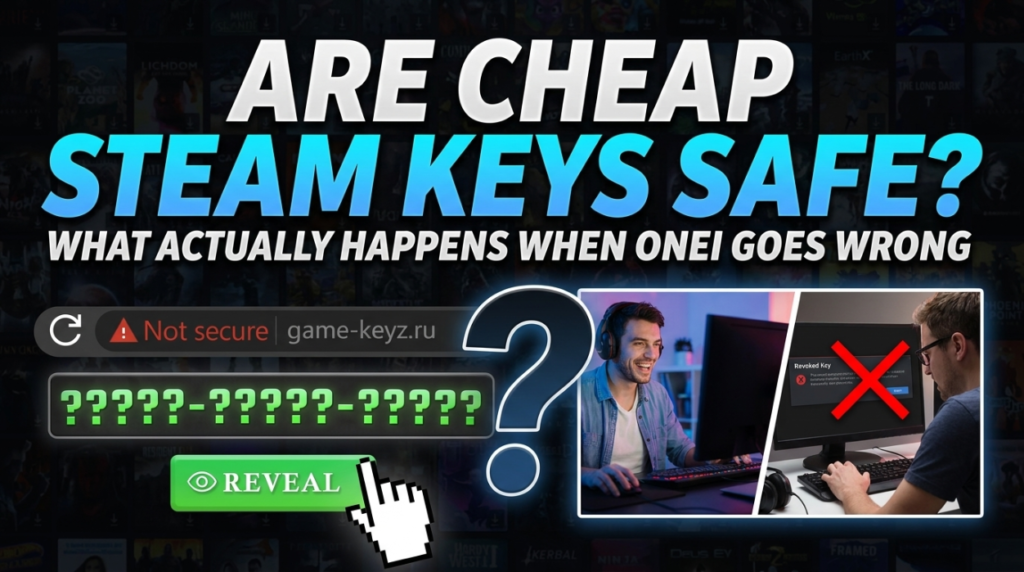
You found a game for $12 instead of $40. The site looks professional. But something makes you hesitate, and you are right to.
Not all cheap Steam keys are equal, and the difference is not the price — it is where the key came from. Here is how to tell the two categories apart, and what actually happens when a key goes wrong.
The distinction that matters: authorised vs marketplace
Authorised resellers
These stores buy keys directly from publishers or approved distributors. The publisher is paid, the key is legitimate, and the store is accountable for it.
Fanatical is the most prominent example. It is an authorised retailer, well known for bundles, and if a key fails you deal with a company that has a support department and a reputation to protect.
Grey-market marketplaces
These are platforms where third-party sellers list keys. The site itself is not selling you the key — it is hosting whoever is.
G2G and similar marketplaces work this way. Prices are often lower because sellers source keys from cheaper regions, bulk bundles, or occasionally means the publisher never intended.
This is legal to use, and plenty of transactions go through fine. But you are trusting an individual seller, not the platform.
What can actually go wrong
The key is region-locked
The most common problem by far. A key bought cheaply because it was priced for another region may simply refuse to activate on your account. This is not fraud, it is the key working as designed — just not for you.
The key was already used
You paid for a string of characters someone else redeemed. Recovery depends entirely on the marketplace dispute process and how responsive the seller is.
The key was bought with a stolen card
This is the serious one. If a publisher determines keys were purchased fraudulently, they can revoke them — and the game disappears from the library of whoever ended up with it. You did nothing wrong and you still lose the game and the money.
You have no recourse with Valve
Worth being blunt about: Valve did not sell you the key, so Steam support will not refund it. Your only route is the store you bought from.
How to buy safely
Check the historical low first
Before assuming a grey-market price is a bargain, check IsThereAnyDeal or SteamDB. Official sales frequently match or beat marketplace prices, and an official key has none of the risk.
Prefer authorised stores when the gap is small
Saving $3 is not worth a revocation risk. Saving $30 on a game you would otherwise never buy is a different calculation. Make it consciously.
Read what you are actually buying
Check whether the listing says Steam key, Steam gift, or account. Gifts can be reversed. Bought accounts violate the Steam Subscriber Agreement outright and risk your access entirely.
Never buy an account
Purchasing or sharing accounts breaches Valve terms and can cost you every game you own, not just the one you bought. No discount justifies that.
Are Steam files themselves safe?
Searches pairing Steam with virus scanners spike regularly, so it is worth stating plainly: games downloaded through Steam itself are delivered by Valve and are as safe as any commercial software.
The genuine risks sit elsewhere — fake Steam login pages, phishing links sent through chat, third-party mod downloads from unknown hosts, and executables from key sites that ask you to install a downloader rather than giving you a key. If any store asks you to run software to receive a key, close the tab.
The honest summary
- Official Steam sales are risk-free and often cheaper than you assume. Check the Steam sale calendar.
- Authorised resellers like Fanatical are legitimate businesses with real support.
- Grey-market marketplaces are legal but you are trusting an individual seller, with revocation as a genuine if uncommon outcome.
- Account purchases are never worth it.
For price checking and deal tracking, see our directory of the best Steam tools.
Frequently asked questions
Is it safe to buy Steam keys from third-party sites?
Authorised resellers such as Fanatical buy keys directly from publishers and are safe. Grey-market marketplaces where third parties list keys are legal to use but carry real risks including region locks, already-redeemed keys, and revocation if keys were bought fraudulently.
Can Steam ban you for using a cheap key?
Redeeming a key that turns out to be fraudulent generally results in the game being removed from your library rather than an account ban. Buying or sharing accounts, however, directly violates the Steam Subscriber Agreement and can cost you access to everything you own.
Will Steam refund a third-party key?
No. Valve did not sell you the key, so Steam support cannot refund it. Your only recourse is the store or marketplace you purchased from.
What is a region-locked Steam key?
A key priced and issued for a specific country that will not activate on accounts outside that region. It is the most common reason a cheap key fails to work, and it is the key functioning as intended rather than a scam.
Are games downloaded from Steam safe?
Yes. Games downloaded through the Steam client are delivered by Valve and are as safe as any commercial software. The real risks are phishing login pages, links sent in chat, and key sites that ask you to install a downloader instead of providing a key.