Features
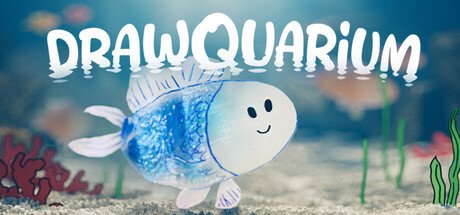
A two-minute trailer for a game about drawing fish ended on the words “Art Is Human” and became the biggest indie marketing moment of the month. The reason it worked is that the game and the message are the same thing.
Drawquarium is a cozy aquarium sandbox from a solo developer who goes by byKaleb, a 3D artist in the film industry. It releases on 13 November 2026. He has said he started building it to bring his own children’s drawings to life.
The release-date trailer has pushed IGN’s upload alone toward 900,000 views, and by the developer’s own account two posts about it passed 100,000 likes each on X. People have been replying to say it made them cry — at a trailer, for an aquarium game.
Why this one landed
Plenty of studios have put an anti-AI message in their marketing this year. Most of it reads as positioning — a statement attached to a product that would be identical without it.
Drawquarium is the rare case where the mechanic is the argument. The entire game is: a human draws something imperfect by hand, and it becomes alive. The fish you make form friendships, develop rivalries, pair off and have babies. Nothing in that loop works if the drawing is not yours.
So when the trailer says “Art Is Human,” it is not a slogan bolted onto a storefront. It is a description of the systems you are about to buy. That is why it did not read as cynical, and cynicism is what kills this kind of marketing.
The children’s-drawings detail is doing most of the work
The origin story is on the Steam page in the developer’s own words: he wanted to bring his kids’ drawings to life. That single line does something no amount of production value can.
It establishes that the game existed before the discourse. A message about human-made art lands very differently when the project it is attached to started as a dad making something for his children than when it started as a studio looking for a hook.
It arrived at the right moment
This is landing into a year where the backlash against AI art on Steam has been building and Valve now requires disclosure. A large audience has been looking for something to point at and say “this, instead.” Drawquarium gave them an object.
The uncomfortable part
We have argued on this site that raw gameplay beats polished trailers, and that developers over-invest in cinematic announcements that convert badly.
This is a clean counterexample, and it is worth being honest about that rather than explaining it away. A carefully made emotional trailer did in one week what years of posting gameplay clips does not.
But the exception has a shape, and it is narrow:
- The emotion was true to the product. The trailer promises a feeling the game actually delivers. A cinematic that promises a tone the game does not have converts worse than no trailer at all.
- It carried a position, not a mood. “Art Is Human” is a claim people wanted to repost. “Look how beautiful our game is” is not.
- The developer was visible. A named person with a stated reason, not a logo.
Strip any one of those and you have an expensive video nobody shares. The lesson is not “make an emotional trailer.” It is that a trailer can carry an argument, and an argument travels where footage does not.
What happens next, and what to watch for
Two things are worth setting expectations on.
A viral trailer is not a review. Drawquarium has not shipped. What is proven right now is that a lot of people want this game to exist — not that the aquarium holds up over twenty hours. There is a free demo on Steam, and playing it is a better basis for a wishlist than the trailer is.
The message will now be copied. Within a month there will be trailers ending on human-made declarations attached to games where it means nothing. That is what happens to every successful marketing move, and it will make the genuine version harder to believe. Drawquarium benefited from going first.
For the solo developers reading this hoping to repeat it: the repeatable part is not the trailer. It is having a reason for your game to exist that you can say out loud in one sentence, and building the systems that make the sentence true.
Frequently asked questions
What is Drawquarium?
A cozy aquarium sandbox where you draw your own fish and plants and watch them come to life, forming friendships and rivalries. It can also run as an animated desktop wallpaper.
When does Drawquarium come out?
13 November 2026 on Steam.
Why did the Drawquarium trailer go viral?
It is an emotional two-minute trailer that ends on the line “Art Is Human,” landing in the middle of the debate about AI-generated art in games. The message matched the game’s central mechanic — hand-drawn creations coming to life — which is why it read as sincere rather than as positioning.
Is there a Drawquarium demo?
Yes, a free demo is on Steam now.
Who made Drawquarium?
A solo developer known as byKaleb, a 3D artist in the film industry, with rokaplay publishing. It is his first game.
Is Drawquarium anti-AI?
The trailer closes on “Art Is Human.” The game is built entirely around the player drawing things by hand, so the position is expressed through the design rather than only in the marketing.
How much does Drawquarium cost?
No price has been announced yet.
Sources and citation
- Drawquarium on Steam — release date, developer, publisher, feature list and the developer’s statement about his children’s drawings
- Pixelkin — the “Art Is Human” closing line and the figure of nearly 900,000 views on IGN’s upload
- Drawquarium — Official Release Date Trailer
- X like counts are as reported by the developer and have not been independently verified here
Recommended reading
- The Steam AI art backlash
- Steam’s AI disclosure rules
- Raw gameplay beats polished trailers
- Why indie games go viral
- The game announcement timeline
- Indie games should not market like AAA
- Desktop pet games on Steam
- The best cozy indie games on Steam
- Upcoming indie games to wishlist
- The twelve jobs of a solo developer