Features
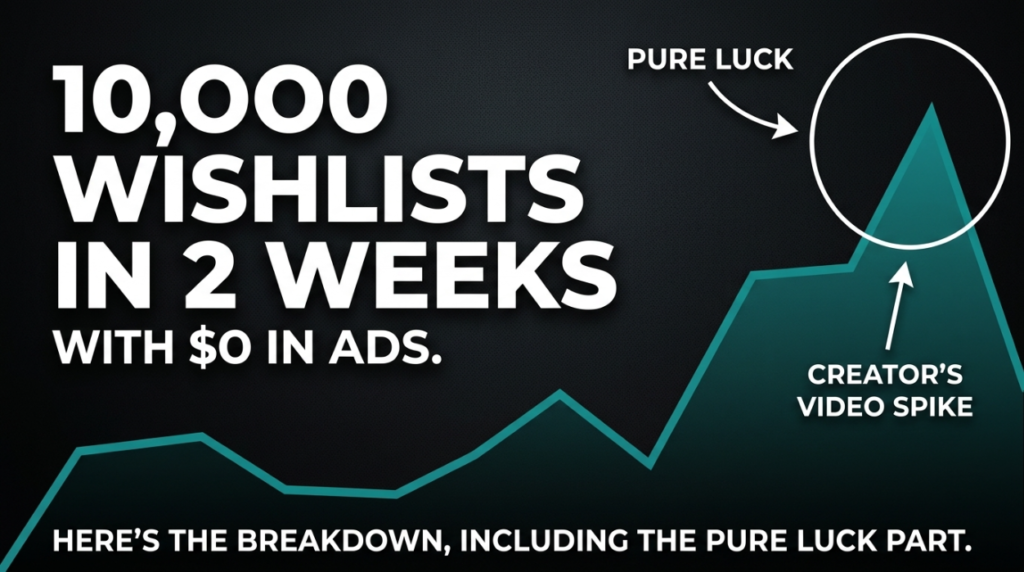
A solo developer just hit 10,000 Steam wishlists in two weeks with zero advertising spend, and then did something unusually useful: wrote up exactly what happened, including the parts they refuse to take credit for.
The game is a first-person cozy game about tidying a sleeping dragon hoard — sweep the gold, find the treasures buried underneath, sort them into collections. Built in Unreal Engine 5. The full post is on r/gameDevMarketing, and the takeaways are worth reading even if you never make a cozy game.
The numbers
- Instagram Reel: 355,000 views
- TikTok: 106,000 views
- Creator video (@whoelsbutme): 109,000 views
- Result: 10,000+ wishlists, $0 spent
At peak, the developer was pulling 1,000 to 1,500 wishlists per day for three days straight.
Lesson 1: borrow an audience that already exists
This is the insight most worth stealing. The developer did not have to invent an audience, because cleaning content is already one of the biggest categories on short-form video — power washing, restoration, room makeovers, declutter timelapses. Millions of people watch that daily with no interest in games whatsoever.
The game looks like that content. Nobody had to be convinced that watching mess become order is satisfying; that was true before the game existed. As the developer puts it, the genre did the work.
The generalizable version: if your game resembles an existing non-gaming content behaviour, that is worth more than any amount of posting discipline.
Lesson 2: first-second retention is the entire game
The developer admits they did not understand the Instagram algorithm going in. The first video managed 600 views in 12 hours — a flop by any measure.
Then it started climbing. It grew in waves and finished at 355,000 views, and the metric that drove it was 72% first-second retention. The TikTok that later went viral hit a similar ~70%.
That is the number to optimise. Not length, not hashtags, not posting cadence — whether people are still watching one second in.
Lesson 3: the Steam page must exist before the video does
The developer calls this obvious in hindsight, and it is the single most actionable warning in the post: the traffic arrives all at once and then it is gone.
Had the video gone up first and the Steam page followed a week later, almost none of that audience would have converted. There is no second chance at the same wave. If you are planning any kind of video push, the wishlist button needs to be live first.
Lesson 4: some of it was luck, and saying so matters
The honest part. The developer repeatedly notes that similar follow-up videos could not reproduce the result, and that a creator picking the game up independently was not something they engineered. They had made games and marketing attempts before that went nowhere.
Their read is that the concept itself carried the marketing: finding the right genre and concept, and implementing it well, makes the marketing process dramatically easier. The videos did not manufacture demand so much as reveal it.
What went wrong
Worth noting for anyone doing their own Reddit marketing: the developer says their attempts at playful, warm-hearted comments backfired. Readers took the jokes as mockery rather than humour. Tone is hard to land in text with strangers, and a community that suspects it is being condescended to will turn quickly.
The honest summary for other devs
You cannot replicate the luck. You can replicate the setup:
- Build something that resembles content people already watch for non-gaming reasons.
- Obsess over the first second of every clip, not the whole clip.
- Have the Steam page live before you post anything, because the wave does not come back.
- Accept that concept selection is marketing. A game that is hard to show is hard to sell.
For more on what is working in the indie space right now, see how How to Fish hit 142,000 concurrent players on a similar clip-driven hook, or browse our resources for developers.
Source: r/gameDevMarketing.
Frequently asked questions
How did this developer get 10,000 wishlists without ads?
Through organic short-form video. One Instagram Reel reached 355,000 views with 72% first-second retention, a TikTok reached 106,000, and a content creator independently made a video that reached 109,000 more. No money was spent on advertising.
What is first-second retention and why does it matter?
It is the percentage of viewers still watching one second into a video. The developer videos hit around 70-72%, which is what drove the algorithm to keep pushing them. It matters more than length, hashtags, or posting frequency.
Should I launch my Steam page before or after marketing videos?
Before, always. Viral traffic arrives in a single wave and disappears. If the Steam page is not live when the video lands, that audience cannot wishlist and will not return.
Can any game do this?
Not equally. The strategy worked because the game visually resembles cleaning and organizing content, an established non-gaming video category with a built-in audience. Games without an obvious existing content analogue have a much harder path.
New reads this week
Published 18 September 2026 on IndieForGames.