News
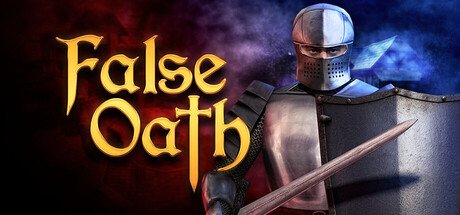
False Oath is a medieval survival horror game built deliberately like a 1998 one — fixed cameras, tank controls, limited ammo — and it is coming to Steam in Q1 2027. Searches for it rose +2,750% against “steam” in the United States this week, which is a striking amount of attention for a game still more than a year out.
The premise
False Oath casts you as Elis, a knight of the Kingdom of Torvenia. A plague is spreading, the royals are in danger, and the royal healer has sent you to gather the ingredients for a potion that cures any ailment. Time and the plague are both working against you.
It is developed by Daniel Almenara and Nytelynn, published by Good Goblin, for Windows, in English and Latin American Spanish.
The feature list is a thesis
Read the store page’s own bullet points and you are reading a list of things the genre spent twenty years removing:
| Feature | What it is actually for |
|---|---|
| Fixed camera angles | The developer controls exactly what you can see, and what you cannot |
| Tank controls | Turning around costs time, so retreat is a decision |
| Melee-focused combat | Every fight happens at the range where mistakes are unrecoverable |
| One ranged weapon, limited ammo | The safe option is finite, so using it is a resource decision |
| Limited healing items | Damage carries forward between rooms |
| Manual saving in designated areas | Progress itself becomes something you can lose |
These are usually described as limitations that better technology fixed. They are better understood as a single coherent system for making a building frightening. Modern over-the-shoulder horror gave the player a free camera, unlimited turning speed and autosaves, and then had to compensate with louder monsters. That is why so much of the genre has drifted toward chase sequences and jump scares — when the space itself cannot threaten you, something has to run at you.
The same logic explains why the site’s no-combat horror games work: take away the player’s power and the room does the work. False Oath takes a different route to the same place. It leaves you armed, and makes moving expensive.
The honest caveat: Q1 2027 is a long way away
- No price has been announced.
- Q1 2027 is a window, not a date, and windows on two-person projects move.
- The credited team is two people. That is not a criticism — it is the reason the retro constraints are a smart scope decision as well as an aesthetic one — but it is relevant to how firmly you should hold the date.
- Nothing has been demonstrated at length. Fixed-camera horror lives or dies on individual room composition, and no amount of store-page copy tells you whether the rooms are good.
If you want it, the useful action is wishlisting rather than anticipating. Wishlists are the signal that decides whether a small horror project gets finished with resources or finished on fumes.
Frequently asked questions
When does False Oath release?
The Steam store page lists a release window of Q1 2027. No specific date has been announced.
Is False Oath like Resident Evil?
It is explicitly built on the same conventions: fixed camera angles, tank controls, melee-focused combat, limited ammunition and healing, and manual saving in designated rooms.
How much will False Oath cost?
No price has been published on the Steam store page at the time of writing.
Who is developing False Oath?
Daniel Almenara and Nytelynn, published by Good Goblin.
What platforms is False Oath on?
Windows only, according to the Steam store page, in English and Latin American Spanish.
Recommended
- The Best Indie Horror Games Right Now (One Listens to You Scream)
- 10 Horror Games Where You Cannot Fight Back
- Asymmetrical Horror Games: What the Genre Is
- New Steam Games Coming Out: Every Confirmed Release Date
- The Steam Wishlist Playbook
- Upcoming Indie Games Worth Wishlisting
- Silent Breath: The Horror Game That Listens
- Every Indie Game Releasing Soon