DETAILS
- Studio: Playdead
- Genre: Adventure
- Platform: PC, Steam
- Status: Released
Hunted and alone, a boy finds himself drawn into the center of a dark project. That single line is the entire premise, and it is also the last piece of explanation INSIDE will ever give you.
Released July 7, 2016 by Danish studio Playdead, INSIDE is a dark, narrative-driven platformer combining intense action with challenging puzzles. It holds a Metacritic score of 87 and is widely regarded as one of the finest indie games ever made.

Key features
There is no dialogue, no text, and no HUD
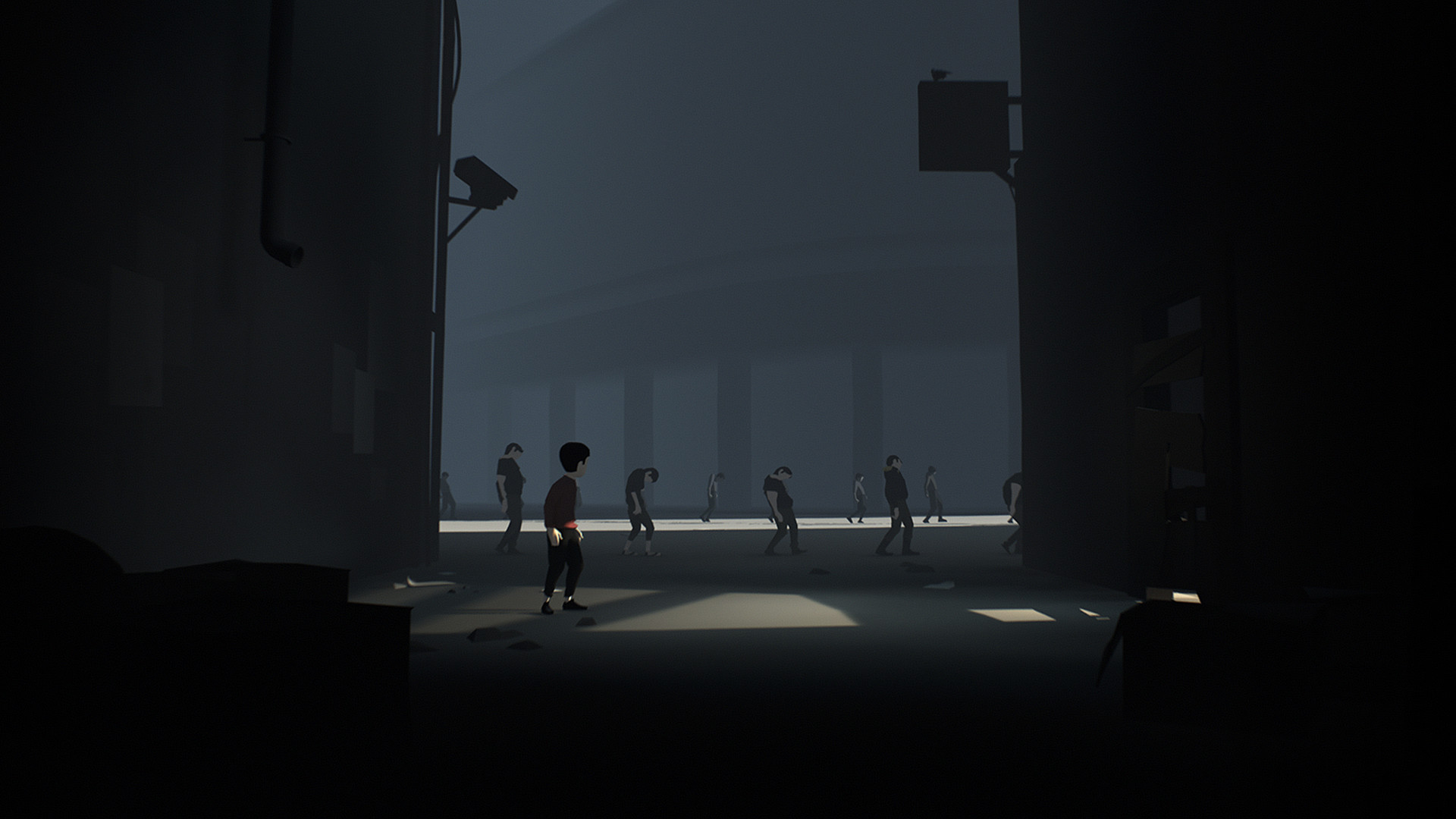
INSIDE never explains itself. There are no tutorials, no subtitles, no objective markers and no exposition of any kind. Everything you understand about the world you infer from what you see happening in the background while you run.
That restraint is the reason the game is still discussed a decade later. It trusts the player completely, and the world is legible enough to deserve that trust.
Puzzles built from the world, not placed in it
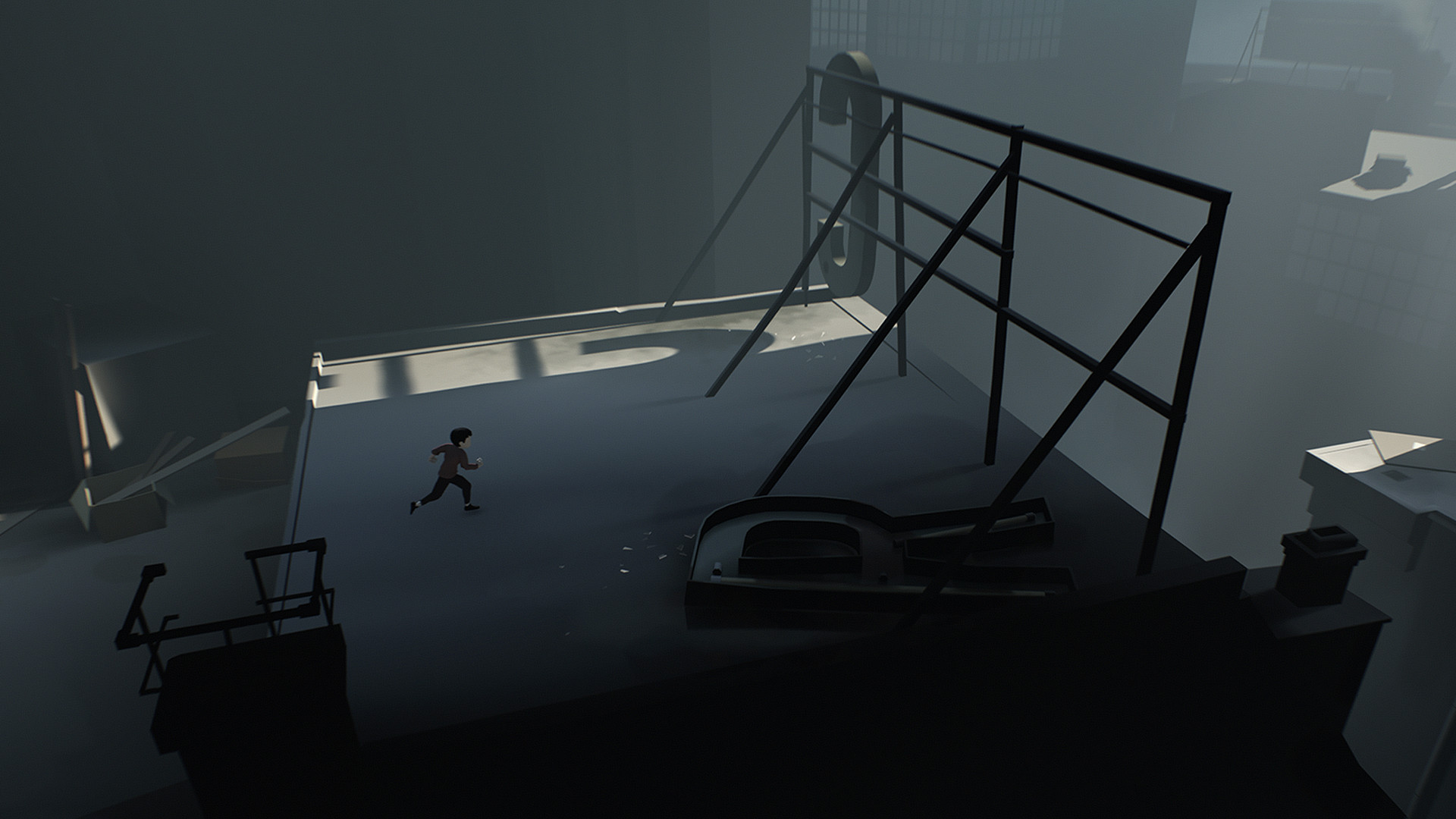
Every puzzle uses the machinery of the environment — the mind-control devices, the water, the shockwaves, the bodies. Nothing is a block-pushing exercise dropped in to slow you down. Solving something usually teaches you another unpleasant fact about where you are.
Art direction doing narrative work
The moody, desaturated palette and precise use of depth are not decoration. Foreground silhouette against soft background detail is how the game shows you what is happening without ever saying it, and the ambient score sits underneath rather than signposting emotion.
Roughly three to four hours, with no filler
INSIDE is short and completely uninterested in padding. There is no collectible checklist bolted on to inflate playtime, though there are hidden secrets for players who want a reason to return.
The ending
Without spoiling anything: INSIDE final twenty minutes are among the most talked-about in the medium, and they remain genuinely divisive. Whatever you conclude the game is about, the ending is the argument for it.
How it compares to LIMBO
Playdead debut, LIMBO (2010), established the studio template: a small boy, a hostile monochrome world, physics puzzles and sudden death.
INSIDE keeps that structure and improves nearly every part of it. The world is three-dimensional and vastly more detailed, the puzzles integrate more closely with the story, and the colour palette — muted, but not monochrome — carries far more information. If LIMBO was a proof of concept, INSIDE is the finished argument.
Should you play it in 2026?
Yes, and it has aged unusually well for a ten-year-old game, precisely because it never relied on technology to impress. The art direction is stylised rather than realistic, so nothing about it looks dated.
It also runs on almost anything, which makes it one of the best options on our list of games for low-end PCs, and at three to four hours it fits comfortably among the best short games on Steam.
Where to find INSIDE
- Available now on Steam — $24.99
- Official site: playdead.com
Frequently asked questions
How long is INSIDE?
Roughly three to four hours for a single playthrough. There is no padding, though hidden secrets give completionists a reason to return.
Is INSIDE scary?
It is unsettling rather than frightening. There are no jump scares, but the atmosphere is consistently oppressive and several sequences are genuinely disturbing.
Do you need to play LIMBO first?
No. INSIDE is a completely separate game with no story connection to LIMBO. They share a studio and a design sensibility, nothing more.
Is there any dialogue in INSIDE?
None at all. There is no dialogue, text, narration or HUD. The entire story is told visually, and everything you understand you infer from what is happening on screen.
How much does INSIDE cost?
$24.99 on Steam. It appears in seasonal sales regularly, so checking the price history is worthwhile.
Who made INSIDE?
Playdead, the Danish studio behind LIMBO. They both developed and published it, releasing on July 7, 2016.